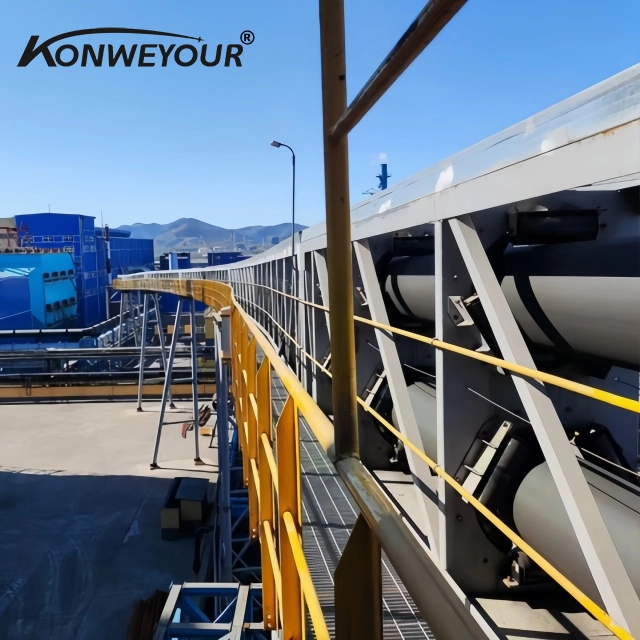
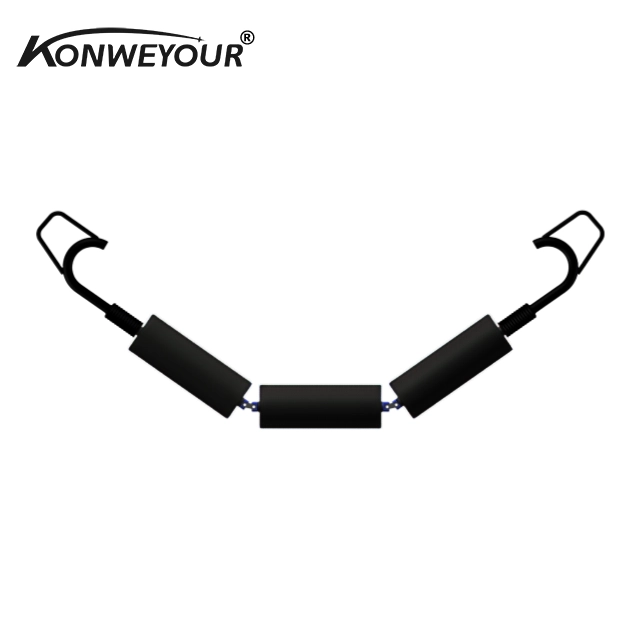
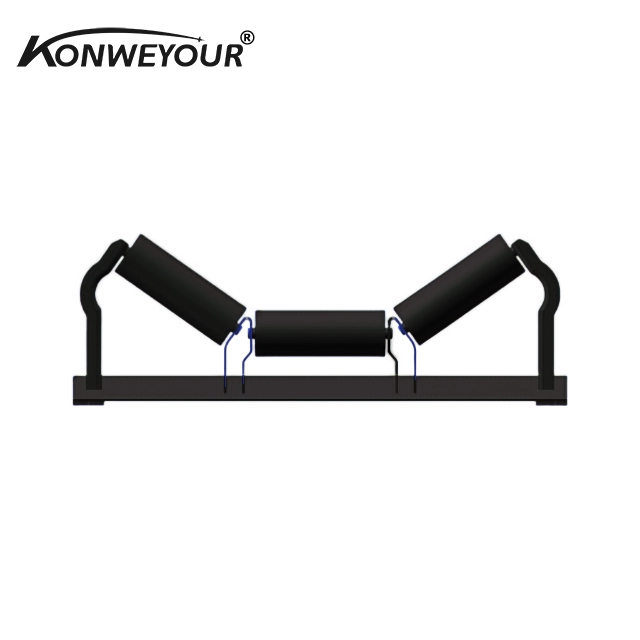
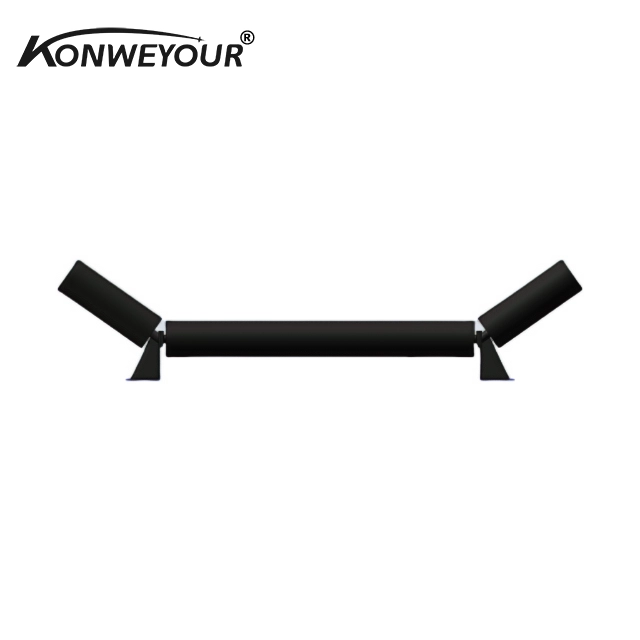
If you’ve spent time around shiftable or suspended conveyors, you already know why garland idlers are having a quiet comeback. Mines are getting deeper, belts are wider, and downtime costs sting. The 3 Roll Garland Roller configuration is, to be honest, one of those “simple but effective” designs that operators keep asking for—precisely because it tracks better and rides smoother when conditions get rough.
Industry trend check: why garland now?
Three things: belts keep getting heavier, environmental sealing is stricter, and maintenance teams are lean. The garland arrangement lets the belt “float” into a stable trough, reduces edge wear, and—surprisingly—cuts the number of emergency tracking interventions. Many customers say they see less dust carryback thanks to steadier belt geometry. In bulk handling (mining, ports, cement), this is not just nice-to-have; it’s money saved.
Core specs (typical, customizable)
| Roller diameter |
Φ89–159 mm (≈3.5–6.25 in) |
| Belt width range |
650–2000 mm, real-world use may vary |
| Trough angle |
35° / 45° (others on request) |
| Bearings |
Deep-groove ball, ISO 281 L10h ≥ 50,000 h @ nominal load |
| Sealing |
Multi-labyrinth + contact seal, target IP66–IP67 |
| TIR (runout) |
≤ 0.6 mm typical (balanced to ≈G16 per ISO 21940) |
| Speed/Load |
≤ 4 m/s; garland load per hanger sized to duty class |
| Temp range |
-40°C to +90°C (low-temp grease option) |
How it’s built (short version)
Materials: precision steel tube (Q235/Q345) or HDPE shell; carbon steel shafts; powder-coated or galvanized brackets. Methods: automated welding, concentric machining, dynamic balancing (ISO 21940), powder coating, press-fit bearings, multi-stage sealing. Testing: runout and rotational resistance, water ingress (IP), salt spray (ASTM B117 ≈72 h), bearing life per ISO 281, belt contact check (ISO 14890 compatibility). Expected service life: around 30,000–60,000 h, depending on load/dust/sealing discipline.
Where it shines
- Open-pit and underground mining (coal, iron ore, aggregates)
- Ports and terminals—shiploaders, stacker-reclaimers
- Cement plants and power stations (fly ash, clinker)
- Shiftable/suspended conveyors where frames flex and terrain changes
Why this 3 Roll Garland Roller gets picked
Better belt tracking under load; reduced edge wear; lower vibration and noise; quick swap-out of individual rolls; and, according to maintenance crews I’ve chatted with, a noticeable drop in “nuisance” stops after upgrade.
Customization menu
Diameter/length to belt width, trough angle 20–45°, steel or HDPE shells, anti-corrosion coatings, FRAS (flame-retardant anti-static) for underground, low-temp grease, ceramic lag inserts for extreme abrasion, hanger spacing and chain type per site standard. Origin: No. 13 Gongqiang Road, Nangong Economic Development Zone, Xingtai City, Hebei Province.
Vendor snapshot (quick compare)
| Vendor |
Sealing |
Balancing |
Testing |
Lead time |
| JT Conveyor |
Multi-labyrinth + contact |
ISO 21940 ≈G16 |
IP, salt spray, TIR log |
Around 2–4 weeks |
| Vendor A |
Labyrinth only |
Shop balance |
Basic rotation test |
4–6 weeks |
| Vendor B |
Contact seal |
ISO class declared |
IP optional |
3–5 weeks |
A quick case note
In a northern iron-ore site (abrasive ore, -25°C winters), swapping legacy troughing sets for 3 Roll Garland Roller hangers cut belt-edge wear by ≈18% over 6 months; unplanned tracking stops dropped from 4.1 to 1.3 per month. The kicker? Crews said roll changes were faster because the garland hangs free—no wrestling frame bolts in the snow.
Certifications, standards, and data points
- Quality system: ISO 9001; CE on request
- Conformance: belt interface to ISO 14890; balancing to ISO 21940
- Typical tests: IP66–IP67 ingress; ASTM B117 salt spray ≈72 h; TIR ≤0.6 mm; rotational resistance logged per CEMA method
Sources and references
- CEMA: Belt Conveyors for Bulk Materials, 7th Ed.
- ISO 14890: Conveyor belts — Specification for rubber- or plastics-covered belts.
- ISO 21940 (series): Mechanical vibration — Rotor balancing.
- ASTM B117: Standard Practice for Operating Salt Spray (Fog) Apparatus.
- ISO 281: Rolling bearings — Dynamic load ratings and rating life.



![[3 Roll Garland Roller]](http://images.cnmqh.com/images/a10010/2025/07/20250717165716988.png)