Jun. 18, 2026
In the demanding environment of aggregate processing, the efficiency of your material transport system depends heavily on the quality of its components. The stone crusher conveyor roller plays a critical role in supporting the conveyor belt and reducing friction during the transport of heavy, abrasive crushed stone. Choosing the wrong roller can lead to premature belt wear, frequent downtime, and increased operational costs. In this comprehensive guide, we will explore the technical nuances of high-performance rollers and how to optimize your crushing line for maximum throughput and durability.

A stone crusher conveyor roller is not merely a rotating cylinder; it is a precision-engineered component designed to withstand extreme axial and radial loads. In stone crushing plants, rollers are exposed to constant impact from falling rocks, thick dust, and moisture. High-quality rollers utilize advanced sealing systems to prevent contaminants from entering the bearing housing, which is the most common cause of failure. By minimizing rolling resistance, these components reduce the energy required to move the belt, directly lowering your electricity costs and extending the lifespan of the motor and gearbox.
Industry Insight: Using precision-balanced rollers can reduce conveyor vibration by up to 30%, significantly decreasing the fatigue stress on the conveyor frame and belt splices.
Depending on the specific stage of the crushing process, different materials for the stone crusher conveyor roller are required. Steel rollers provide the necessary rigidity for heavy-duty loading zones, while rubber-coated rollers are preferred for their impact-absorbing properties and noise reduction. Understanding the trade-off between hardness and elasticity is key to preventing "belt indentation," where the belt sags between rollers, increasing drag.
Preventative maintenance is the only way to avoid catastrophic belt failure. For a stone crusher conveyor roller, the most important check is the "free-spin" test. A roller that has seized due to bearing failure acts like a brake, creating intense friction that can burn through a rubber belt in minutes. Implementing a scheduled lubrication cycle and using infrared thermography to detect overheating bearings can save thousands of dollars in emergency repair costs.

When sourcing replacements, it is vital to adhere to strict technical specifications to ensure compatibility and performance. The load-bearing capacity, shell thickness, and bearing grade are the primary metrics. For heavy-duty crushing operations, we recommend rollers with a minimum shell thickness of 5mm and reinforced labyrinthe seals to keep the fine stone dust out of the lubrication grease.
Understanding why your stone crusher conveyor roller fails is the first step toward increasing uptime. The most frequent culprit is material build-up. When crushed stone dust mixes with water, it forms a cement-like crust around the roller shell, increasing the diameter and causing the belt to mistrack. This not only damages the belt edges but also puts uneven pressure on the roller bearings, leading to premature seizure.
Warning Signs of Failure:
• Excessive noise or "squealing" from the conveyor line
• Visible flat spots on the roller shell
• Belt wandering or tracking issues
• Localized heat emission from the bearing housing
The external environment plays a massive role in the lifespan of your hardware. In extremely cold climates, standard grease can thicken, increasing the starting torque and putting stress on the stone crusher conveyor roller's bearings. Conversely, in high-temperature regions, lubrication can thin out and leak. We recommend using synthetic, wide-temperature grease and corrosion-resistant coatings (such as galvanization or specialized paint) to protect the rollers from acidic rain or corrosive minerals present in certain types of stone.
Investing in a high-grade stone crusher conveyor roller is not an unnecessary expense—it is a strategic move to reduce total cost of ownership. By selecting the right material, adhering to technical specifications, and implementing a rigorous maintenance schedule, you can significantly reduce downtime and increase the profitability of your crushing operation. Quality components ensure that your production line keeps moving, regardless of the material's abrasiveness.
There is no one-size-fits-all answer, as replacement cycles depend on the abrasiveness of the stone and the hourly workload. However, in high-intensity crushing plants, we recommend a comprehensive audit every 6 months. Rollers in the impact zone should be inspected monthly. If you notice a 10% increase in motor power consumption or visible wear on the roller shells, it is time for replacement. Using premium rollers from JT Conveyor can extend these intervals by providing superior wear resistance.
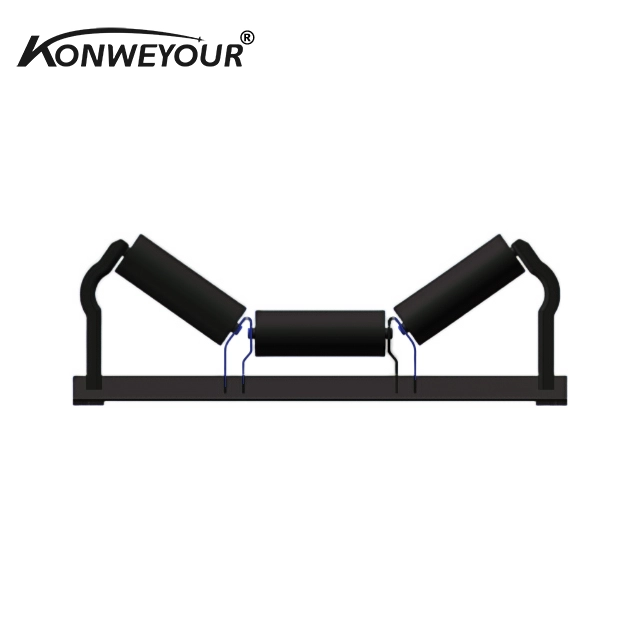
Troughing rollers are sets of three rollers arranged in a V-shape to cradle the belt, creating a "trough" that prevents material from spilling off the sides during transport. Return rollers, on the other hand, are flat rollers that support the empty belt as it returns to the head pulley. While both are essential, troughing rollers handle the primary load of the stone and require higher load-bearing specifications to maintain the belt's shape and center.
While standard rollers may work for light-duty applications, they typically fail quickly in stone crushing environments. Standard rollers often lack the shell thickness and advanced sealing required to keep out abrasive stone dust. This leads to rapid bearing failure and belt damage. We strongly recommend utilizing dedicated stone crusher conveyor rollers that are specifically engineered for high-impact and high-abrasion scenarios to ensure long-term operational stability.
Belt mistracking occurs when the conveyor belt shifts laterally. This is often caused by rollers that are not perfectly cylindrical or those that have seized. A seized roller creates a point of high resistance, forcing the belt to "climb" or slide to the side. High-precision rollers ensure a uniform surface and consistent rotation, which is fundamental to keeping the belt centered and preventing costly damage to the conveyor structure and belt edges.
Jan 30,26
Navigating the Landscape of Custom Conveyor Manufacturers and Practical Design
Feb 25,26
Comprehensive Guide to Conveyor Belt Rollers and Their Applications
Feb 04,26
Optimizing Material Handling with a Leading Conveyor Belt Company
Jun 25,25
Hebei Juntong Machinery Launches Annual 6S Workshop
In order to comprehensively improve the management level of production sites and consolidate international manufacturing standards
Feb 07,26
Exploring Conveyor Systems and the Latest Conveyor for Sale Options
Feb 14,26
Advanced Conveyor Construction Equipment for Modern Industrial Solutions
SUBSCRIBE NEWSLETTER