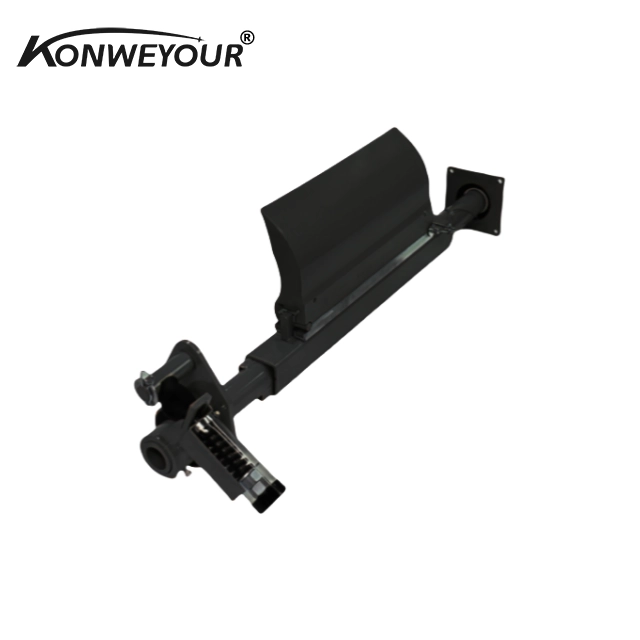
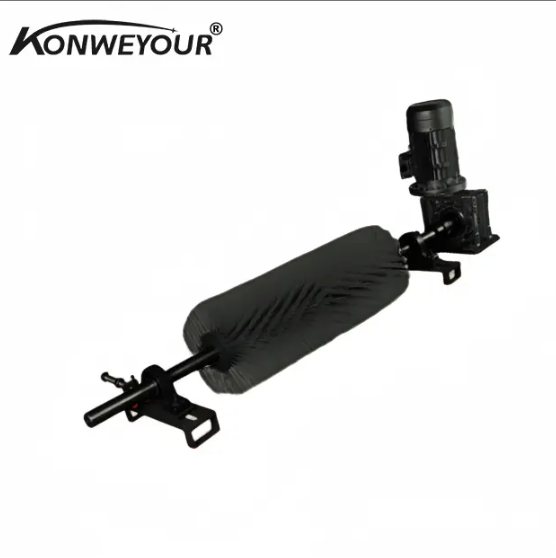
If you’ve ever fought fines and sticky carryback, you know the pain: mistracking, material buildup, and that slow, grinding hit to throughput. I’ve seen crews babysit scrapers all shift. A well-tuned Motorized Brush Conveyor Belt Cleaner changes that equation—especially in light to medium-duty lines where precision matters more than brute force.
What’s trending (and why it matters)
Across aggregates, recycling, grain, and battery materials, motorized brush cleaners are quietly replacing secondary blades. Reason? Better contact with fine particles and sticky clays, less belt damage, and fewer stoppages. Many customers say they want “less scraping, more brushing”—and, to be honest, I get it.
Technical snapshot and how it’s built
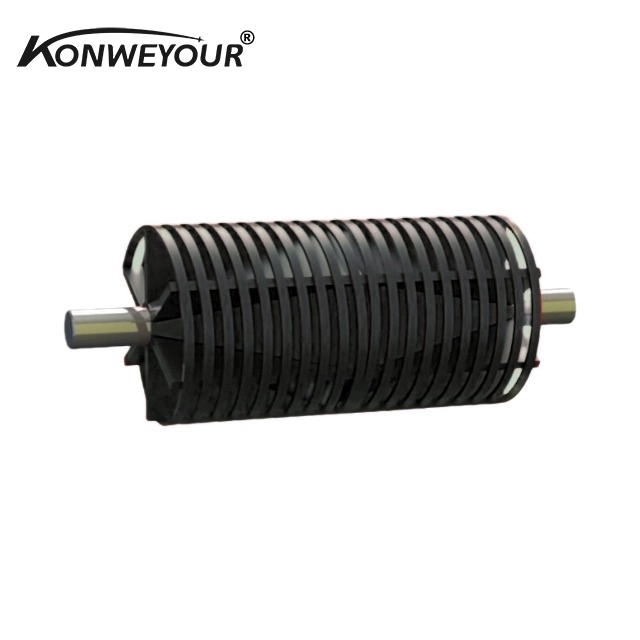
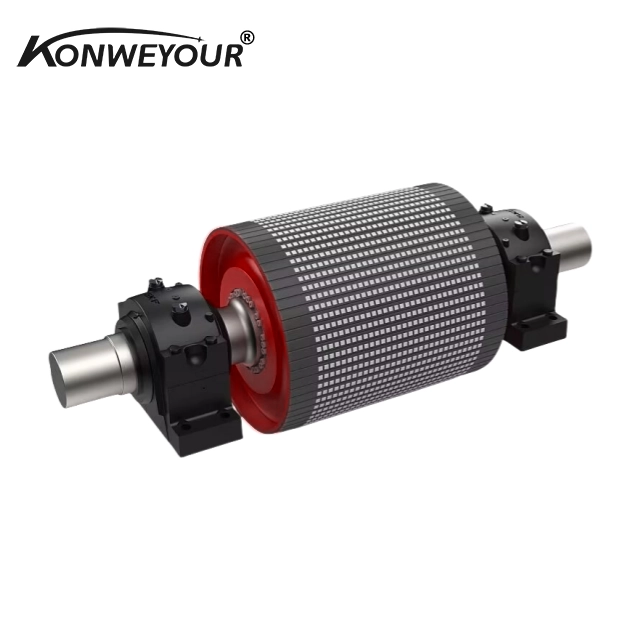
- Brush core: dynamically balanced steel tube; hub vulcanized; TIG-welded brackets.
- Filaments: nylon or antistatic poly; optional oil-resistant PU blend for tacky fines.
- Drive: IP65 motor/gearbox (IEC frame); speed ≈ 200–900 rpm (VFD-ready).
- Testing: ISO 1940-1 balance, IEC 60034 motor checks, ASTM B117 salt spray on hardware, runout ≤ 0.5 mm (typ.).
- Service life: ≈ 12–24 months on typical duty; real-world use may vary with moisture, belt speed, and mineral abrasiveness.
Specification (typical options)
| Parameter |
Value (≈) |
|---|
| Belt width range | 500–1800 mm |
| Brush outside diameter | 180–350 mm |
| Motor power | 0.37–1.5 kW |
| Speed range | 200–900 rpm (VFD adjustable) |
| Voltage | 380–480V, 3ph; others on request |
| Temp window | −20 to +70 °C (high-temp options) |
| Ingress protection | IP65 motor/gearbox |
| Mounting | Secondary/tertiary, return belt |
Where it shines
Sticky limestone, clay-laden ores, fertilizer, RDF, grain/feed, and battery-grade powders. Actually, anywhere fine carryback sneaks past the primary blade. The Motorized Brush Conveyor Belt Cleaner excels on vulcanized belts compliant with ISO 14890; antistatic options align with ISO 284 and ATEX zones (ask first, it’s important).
Process flow from the factory in Hebei
Origin: No. 13 Gongqiang Road, Nangong Economic Development Zone, Xingtai City, Hebei Province.
- Materials selection (filament grade, tube wall thickness, seals).
- Fabrication (precision machining; welded supports; vulcanized hubs).
- Balancing and assembly (ISO 1940-1 G6.3 target; verified runout).
- Electrical test (IEC 60034 load/heat; vibration baseline).
- Corrosion and filament wear sampling (ASTM B117; abrasion indices).
- On-belt pilot run (optional) + final QA; CE/ISO paperwork.
Advantages you can feel on shift
- Gentle on belt covers vs. hard secondary blades.
- Consistent cleaning across splices and repairs.
- Lower housekeeping, fewer mistracks; better dust control.
- VFD tuning lets you “match” brush speed to belt speed—surprisingly effective.
Vendor comparison (quick take)
| Feature |
JT Conveyor Brush |
Generic A |
Generic B |
|---|
| Brush speed control | VFD-ready, wide range | Fixed | Two-step |
| Filament options | Nylon, antistatic, PU | Nylon only | Nylon + PU |
| Motor rating | IP65 (IEC) | IP54 | IP55 |
| Certifications | ISO 9001, CE; ATEX on request | CE | — |
| Lead time | ≈ 2–4 weeks | 6–8 weeks | 4–6 weeks |
| Warranty | 18 months | 12 months | 12 months |
Customization and integration
Custom widths, food-grade filaments, left/right drive, quick-lift mounts, and PLC/VFD packages. The Motorized Brush Conveyor Belt Cleaner can sit secondary after a primary blade or as a return-belt polisher. Compliance notes: ISO 14890 belts, CEMA mounting geometry, and OSHA guarding are observed during install.
Field data and feedback
A limestone quarry reported carryback reduced by ≈ 72% versus a worn secondary blade; housekeeping time down 40%. In a fertilizer terminal, operators said “it finally stopped smearing,” after dropping brush speed slightly below belt speed—counterintuitive, but it worked.
Mini case study
Battery precursor plant (sticky hydroxides): dual Motorized Brush Conveyor Belt Cleaner units on 1200 mm belts, antistatic filaments, IP65 drives with VFD. Results over 6 months: belt mistracks cut by 60%, spillage by ≈ 50%, no belt-cover scoring. That’s real money saved.
Standards and documentation
Conforms with CEMA cleaner placement guidance; belts per ISO 14890; antistatic per ISO 284; motors verified per IEC 60034; guarding aligned with OSHA 1910. Installation manuals and commissioning checklists included.
Authoritative citations
- CEMA Belt Conveyors for Bulk Materials, Cleaner Guidelines.
- ISO 14890: Conveyor belts — Specification for rubber- or plastics-covered belts.
- ISO 284: Conveyor belts — Electrical conductivity — Antistatic requirements.
- IEC 60034: Rotating electrical machines — Performance and testing.
- OSHA 29 CFR 1910 Subpart O — Machinery and machine guarding.