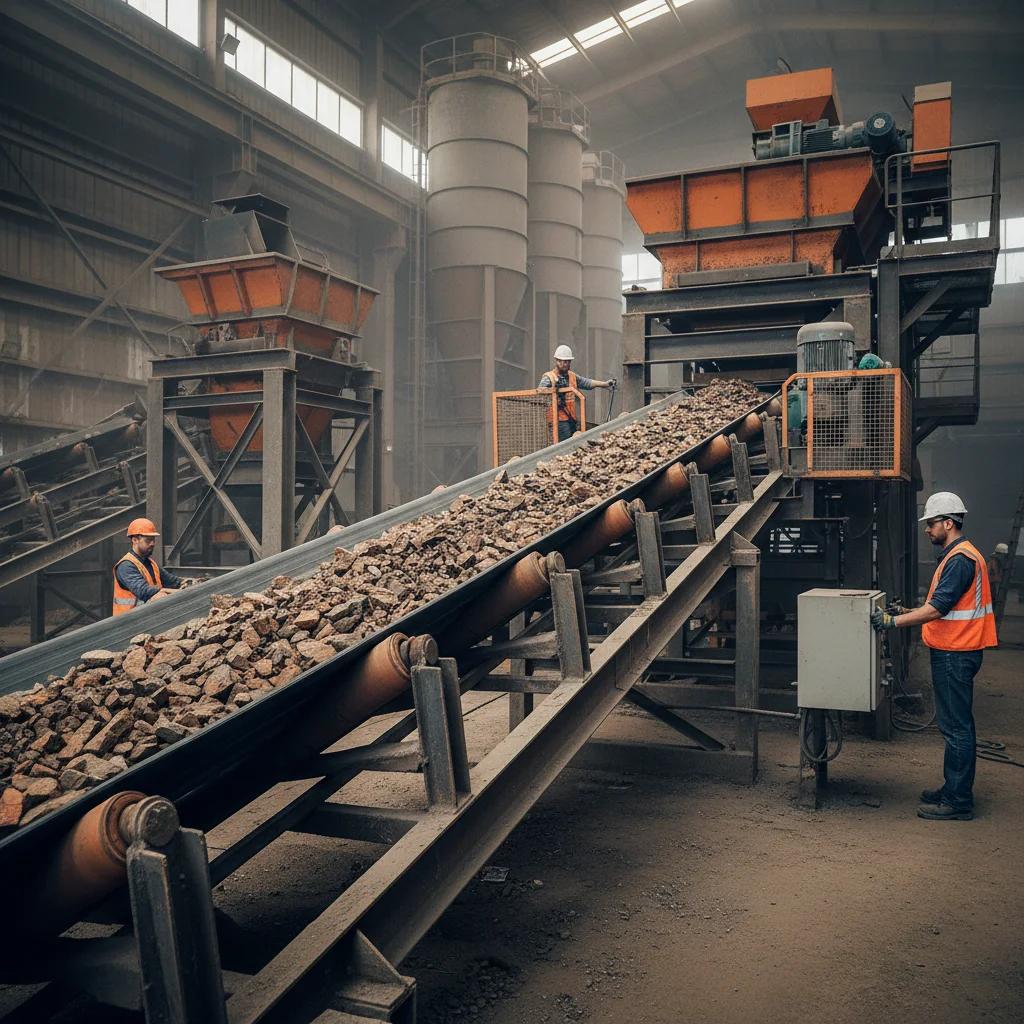
In the demanding world of industrial material transport, the efficiency of bulk handling conveyors serves as the backbone of global production lines. From mining operations to power plants, the ability to move massive volumes of raw materials with precision and minimal waste determines the overall profitability and operational safety of a facility.
However, one of the most persistent challenges in these systems is material carry-back, where residual fines adhere to the belt, causing buildup and premature equipment wear. To combat this, high-performance cleaning solutions have become indispensable, ensuring that the transport cycle remains seamless and the environment stays clean.
Understanding the synergy between robust conveyor design and advanced cleaning technology is key to reducing downtime. By integrating specialized components like tungsten carbide blades, operators can significantly enhance the lifespan of their bulk handling conveyors, ensuring consistent throughput even in the harshest industrial environments.

The Global Impact of Bulk Handling Conveyors
On a global scale, bulk handling conveyors are essential for the movement of commodities that fuel the world economy, such as iron ore, coal, and cement. According to international industrial standards, the optimization of material flow can reduce energy consumption by up to 15%, making the efficiency of these systems a matter of both economic and environmental importance.
The primary challenge facing these global networks is the aggressive nature of the materials transported. Abrasive particles and corrosive moisture can rapidly degrade system components, leading to unplanned outages that cost millions in lost productivity. This is why the implementation of superior cleaning and wear-protection systems is no longer optional but a critical requirement for modern industrial infrastructure.
Defining Efficiency in Bulk Material Transport
In simple terms, bulk handling conveyors are integrated systems designed to move large quantities of unbound materials from one point to another. Unlike unit handling, bulk transport deals with granular or powdered substances, requiring specialized belts and cleaning mechanisms to prevent material spillage and ensure a continuous flow.
Modern industry relies on these systems to maintain a "lean" supply chain. By automating the transport of raw materials, companies can eliminate the logistical bottlenecks associated with manual hauling, allowing for a seamless transition from extraction to processing. This connectivity is what enables the scale of production seen in today's global mining and construction sectors.
The true definition of efficiency in this context is the maximization of "up-time." A conveyor that runs without interruption, supported by low-maintenance components and effective cleaning blades, minimizes the human intervention required and reduces the risk of workplace accidents caused by material accumulation.
Core Components for High-Performance Cleaning
To maintain the integrity of bulk handling conveyors, the cleaning assembly must be robust. The use of tungsten carbide blades is a game-changer, as these materials deliver superior cleaning performance by effectively removing fine residual materials that standard rubber scrapers often miss.
A critical factor is the "optidur NC" wear resistance. This specialized engineering ensures that the blades can withstand heavy-duty and high-speed applications without rapid degradation. By maintaining a sharp edge longer, the system reduces the frequency of replacements, directly lowering operational costs.
Furthermore, stability is ensured through an adjustable tensioning system. This maintains optimal blade-to-belt pressure, which is essential for consistent cleaning. When combined with a corrosion-resistant structure, these components allow bulk handling conveyors to operate reliably in wet or chemically harsh environments.
Performance Metrics of Wear-Resistant Blades
When evaluating the effectiveness of cleaning systems for bulk handling conveyors, the industry looks at specific performance indicators. These include the abrasion resistance of the blade material, the stability of the tensioning mechanism, and the ease of maintenance provided by modular designs.
By comparing different materials, it becomes evident that tungsten carbide significantly outperforms traditional polyurethane or steel in terms of longevity and cleaning precision, especially when dealing with fine residues in mining and cement plants.
Cleaning Efficiency Rating for Bulk Handling Conveyors Components
Global Applications and Industrial Use Cases
The versatility of these systems means bulk handling conveyors are deployed in a vast array of environments. In the mining sector of Australia and Brazil, they move millions of tons of ore daily, where the corrosion-resistant structure of the cleaners prevents premature failure due to mineral acidity.
Similarly, in power plants and cement factories across Asia and Europe, the ability to handle fine dust and abrasive powders is crucial. The modular design of the cleaning components allows for quick blade replacement, minimizing maintenance downtime and ensuring that the plant operates at maximum capacity.
Long-Term Value and Sustainability Benefits
Investing in high-grade components for bulk handling conveyors provides a clear logical and emotional value proposition. Logically, the reduced wear on the conveyor belt—thanks to the removal of abrasive residues—extends the life of the most expensive part of the system, resulting in significant long-term cost savings.
From a sustainability perspective, efficient cleaning reduces material waste. When residues are properly recovered instead of falling into the environment, the operation becomes more eco-friendly. This aligns with global ISO standards for environmental management and reduces the company's carbon footprint by optimizing material recovery.
Beyond the numbers, there is the element of trust and safety. A clean conveyor system is a safe conveyor system. By eliminating the accumulation of debris under the belts, companies reduce the risk of fire and worker injury, fostering a culture of reliability and professional excellence.
Future Trends in Conveyor Maintenance Technology
The future of bulk handling conveyors is leaning heavily toward digitalization and automation. We are seeing the integration of IoT sensors that can monitor blade wear in real-time, alerting maintenance teams exactly when a replacement is needed, rather than relying on a fixed schedule.
Furthermore, the development of new "super-materials" will likely replace current alloys, offering even higher abrasion resistance and lower friction. This will further reduce the energy required to move the belt and the frequency of maintenance intervals.
As industries move toward "Green Mining" and sustainable manufacturing, the focus will shift to completely closed-loop transport systems. This involves an even tighter integration of high-efficiency cleaning and dust suppression to ensure zero-emission material handling.
Analysis of Component Performance and Maintenance Impact
| Component Feature | Impact on System | Maintenance Frequency | Efficiency Score (1-10) |
|---|
| Tungsten Carbide Blade | Superior Fine Removal | Very Low | 10 |
| Optidur NC Coating | Extreme Wear Resistance | Low | 9 |
| Adjustable Tensioning | Consistent Belt Pressure | Medium | 8 |
| Corrosion-Resistant Frame | Wet Environment Stability | Very Low | 9 |
| Modular Blade Design | Rapid Component Swap | Fast | 10 |
| Standard Rubber Strip | Basic Cleaning | High | 5 |
FAQS
Tungsten carbide blades offer superior hardness compared to rubber or standard steel. They create a precise cleaning edge that effectively removes fine residual materials from the belt surface, significantly reducing carry-back and protecting the belt from abrasive wear.
Optidur NC provides exceptional wear resistance, which means the cleaning blades last much longer even under heavy-duty conditions. This extends the service life of the components and reduces the frequency of maintenance shutdowns.
Yes, the systems are built with a corrosion-resistant structure specifically designed to maintain reliable performance in wet, humid, or chemically aggressive environments, making them ideal for mining and chemical processing.
The modular design allows for quick blade replacement without needing to dismantle the entire cleaning assembly. This drastically minimizes maintenance downtime and reduces the labor hours required for upkeep.
Consistent pressure between the blade and the belt is required for a thorough clean. An adjustable tensioning system ensures that the blade doesn't lift or press too hard, maintaining optimal performance throughout the blade's lifespan.
Yes, the cleaning components for bulk handling conveyors are widely applicable and can be customized to fit various belt widths across mining, cement, and power plant applications.
Conclusion
In summary, the operational success of bulk handling conveyors depends heavily on the quality of their cleaning and maintenance systems. By utilizing tungsten carbide blades and corrosion-resistant materials, industrial operators can achieve a superior cleaning effect, drastically reduce wear and tear, and minimize costly downtime through modular, low-maintenance designs.
Looking forward, the integration of smarter materials and predictive maintenance will further refine these systems. For companies seeking to optimize their material transport and ensure long-term sustainability, investing in high-performance conveyor components is the most effective strategy for maintaining a competitive edge in the global industrial landscape. Visit our website: www.jtconveyor.com