In the modern industrial landscape, maintaining the efficiency of a conveyor system is paramount to ensuring seamless production cycles and reducing operational downtime. The accumulation of fine particles and sticky residues on belt surfaces often leads to tracking issues, premature wear, and material contamination, creating a critical need for specialized cleaning solutions.
The introduction of advanced cleaning technologies, specifically the Motorized Brush Conveyor Belt Cleaner, addresses these challenges by offering a continuous, automatic method to keep belts pristine. By integrating a motor-driven rotary brush, industries can move away from labor-intensive manual cleaning toward a systematic approach that preserves the integrity of the belt while optimizing throughput.
Understanding the synergy between cleaning components and the overall conveyor architecture is essential for any facility aiming for high E-E-A-T (Experience, Expertise, Authoritativeness, and Trustworthiness) standards in their material handling operations. From food processing to light packaging, the right cleaning strategy not only extends equipment life but also ensures a safer and more hygienic working environment.

Global Impact of Conveyor Cleaning Technology
On a global scale, the reliance on conveyor systems has grown exponentially as supply chains become more complex. According to industrial automation trends, the cost of unplanned downtime due to belt misalignment—often caused by material buildup—can cost enterprises millions in lost productivity. This has shifted the focus toward proactive maintenance tools that can operate in real-time without stopping the production line.
The implementation of motorized cleaning solutions represents a significant leap in operational reliability. By automating the removal of sticky materials and fine dust, companies can adhere to stricter ISO quality standards and safety regulations, ensuring that the movement of goods remains fluid and consistent regardless of the material's physical properties.
Defining the Motorized Brush Cleaner System
The Motorized Brush Conveyor Belt Cleaner is an advanced cleaning mechanism specifically engineered to eliminate fine particles, sticky residues, and debris from the surface of a conveyor belt. Unlike passive scrapers, this system utilizes a motor-powered rotating brush that provides active, continuous scrubbing action, ensuring that even the most adherent substances are removed efficiently.
At its core, the system is designed for light to medium-duty applications, making it a versatile choice for environments where belt surface integrity is a priority. The rotating action ensures that cleaning is consistent across the entire width of the belt, preventing the "tracking" issues that occur when material builds up unevenly on one side of the belt.
By integrating this technology, operators can achieve a high level of automation in their cleaning process. The motor-driven roller minimizes the need for manual intervention, transforming a traditionally tedious maintenance task into a seamless part of the conveyor's operational cycle.
Core Components for Optimal Belt Performance
The effectiveness of a conveyor cleaning system depends heavily on its component quality. The electric rotary brush is the heart of the system, providing the necessary torque to lift sticky materials without applying excessive pressure that could damage the belt.
A critical feature is the flexible bristle design. These bristles are engineered to be soft yet durable, allowing them to penetrate the texture of the belt to remove fine particles while remaining gentle enough to prevent surface wear, thereby significantly extending the service life of the belt.
Furthermore, the adjustable tensioning system and modular structure ensure that the cleaner can be adapted to various belt widths and types. This scalability allows the system to maintain consistent performance even as the conveyor belt naturally stretches or wears over time.
Efficiency Metrics in Material Handling
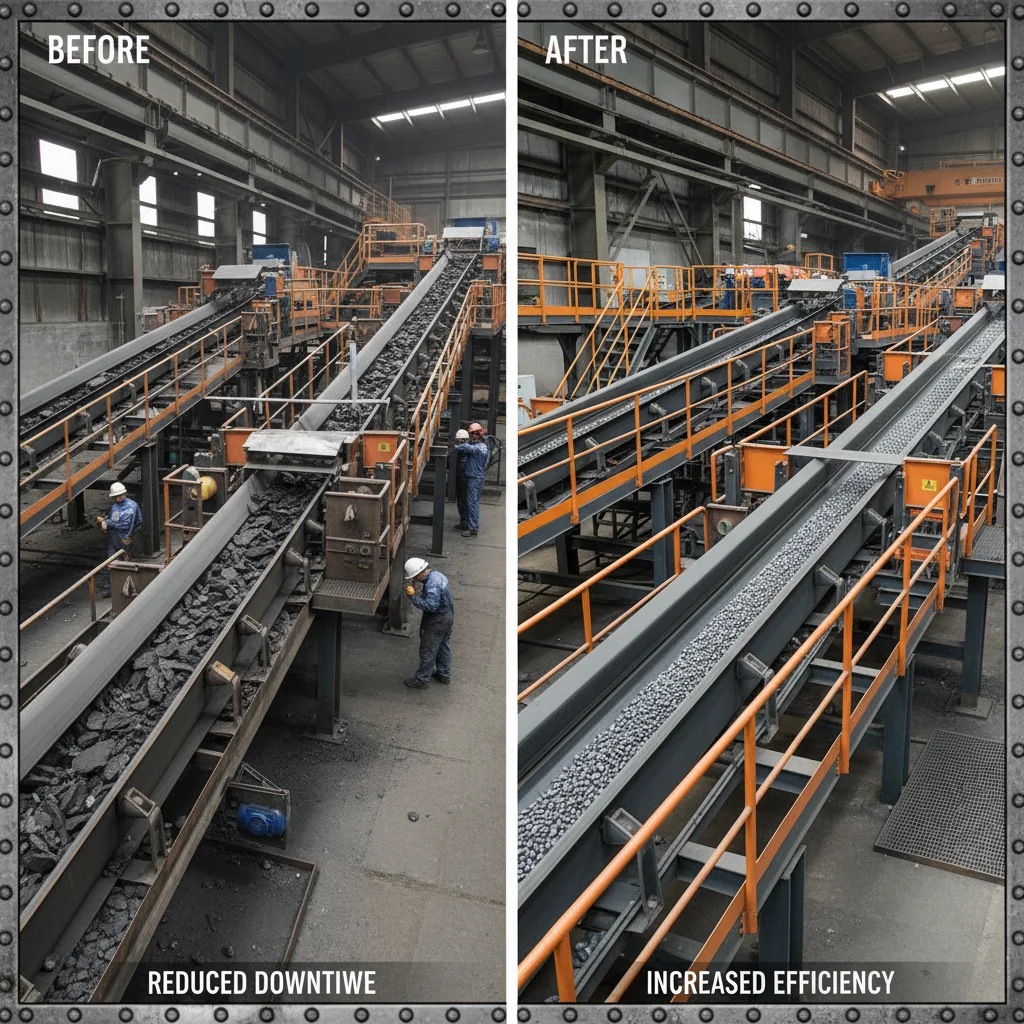
Measuring the efficiency of a conveyor cleaner involves analyzing the reduction in material carry-back and the increase in belt lifespan. When comparing motorized brushes to traditional static blades, the difference in cleaning efficacy for "sticky" materials is substantial, as the rotation creates a dynamic cleaning action.
Operational costs are also reduced through low power consumption and minimized downtime. Because the system is modular, replacing a worn brush roller takes minutes rather than hours, ensuring that the production line remains active.
Cleaning Efficiency by Conveyor Component Type
Global Industrial Applications and Use Cases
The versatility of the Motorized Brush Cleaner makes it indispensable across various sectors. In food processing, where hygiene is non-negotiable, these cleaners remove organic residues and fine crumbs from the conveyor, preventing bacterial growth and ensuring compliance with health safety standards.
Similarly, in the packaging industry and light material transportation, these systems handle everything from dust to small plastic fragments. Whether in a high-tech facility in Germany or a distribution center in Southeast Asia, the ability to maintain a clean belt surface prevents misalignment and ensures that automated sorting sensors operate without interference from debris.
Long-Term Value and Sustainability Benefits
Investing in a motorized cleaning system provides tangible long-term value by drastically reducing the frequency of belt replacements. Since the flexible bristles do not scrape or gouge the belt surface like metal blades do, the physical wear on the conveyor is minimized, leading to a lower total cost of ownership (TCO).
From a sustainability perspective, reducing belt waste means fewer synthetic materials end up in landfills. Additionally, the energy-efficient design of the motor ensures that the increase in cleaning power does not lead to a significant spike in electricity consumption, aligning with global "Green Factory" initiatives.
Beyond the numbers, there is an emotional value in operational peace of mind. Facility managers can trust that their systems are running optimally, reducing the stress associated with emergency breakdowns and the safety risks involved in manual cleaning of moving machinery.
Future Trends in Automatic Belt Maintenance
As we move toward Industry 4.0, the integration of smart sensors into conveyor cleaning systems is the next frontier. We anticipate the rise of "predictive cleaning," where sensors detect the level of material buildup and automatically adjust the brush rotation speed or tension to maintain peak efficiency.
Materials science is also evolving, with the development of nano-coated bristles that offer even lower friction and higher durability. These innovations will allow motorized cleaners to handle slightly heavier loads while maintaining the gentle touch required for delicate belt materials.
The shift toward fully automated, self-diagnosing maintenance modules will further reduce the reliance on manual labor, allowing human operators to focus on higher-level system optimization rather than routine cleaning tasks.
Comparative Analysis of Motorized Brush Cleaner Performance
| Performance Dimension | Motorized Brush | Static Blade | Manual Scrubbing |
|---|
| Cleaning Efficacy | Very High (Sticky/Fine) | Medium (Large Debris) | High (but Inconsistent) |
| Belt Surface Wear | Minimal / Low | Moderate to High | Variable |
| Labor Requirement | Automatic / Low | Low (Periodic Adj.) | Very High |
| Installation Ease | Modular / Easy | Simple | N/A |
| Operational Cost | Low Power Consumption | Lowest Initial Cost | Highest Labor Cost |
| Overall Rating | 9.5/10 | 6.0/10 | 3.0/10 |
FAQS
No, the Motorized Brush Conveyor Belt Cleaner is specifically designed with flexible bristles that gently remove debris without causing abrasion or wear. This makes it ideal for delicate or specialized belts where traditional scrapers would be too aggressive.
Belt misalignment, or tracking issues, is often caused by uneven material buildup on the belt. By providing continuous, full-width cleaning, the motorized brush ensures that no sticky residues accumulate, maintaining a balanced surface and stable tracking.
This particular motorized brush system is optimized for light to medium-duty applications, such as food processing and packaging. For heavy-duty mining applications, we recommend our high-impact belt cleaners or reinforced scrapers designed for larger abrasive rocks.
Replacement intervals depend on the material being transported. However, thanks to the modular design, brush rollers can be replaced quickly without significant downtime. Regular inspections are recommended to ensure bristle tension remains optimal.
Yes, the system features an adjustable tensioning structure and a modular installation design, making it compatible with a wide variety of conveyor widths and types, ensuring a snug and effective fit for your specific setup.
The system is engineered for low power consumption. The energy cost is negligible compared to the massive savings gained from reduced belt wear, decreased labor costs, and the elimination of unplanned downtime caused by material buildup.
Conclusion
In summary, the Motorized Brush Conveyor Belt Cleaner represents a critical evolution in material handling maintenance. By combining a motor-driven rotary action with gentle, flexible bristles, it solves the age-old problem of material carry-back and belt wear. The system's ability to automatically remove fine and sticky particles not only enhances the efficiency of the conveyor but also reduces operational risks and long-term costs.
Looking forward, the transition toward automated maintenance is inevitable for industries striving for maximum uptime and sustainability. We recommend that facility managers audit their current cleaning protocols and consider upgrading to motorized solutions to safeguard their equipment and improve overall production quality. For more information on optimizing your system, visit our website: www.jtconveyor.com.