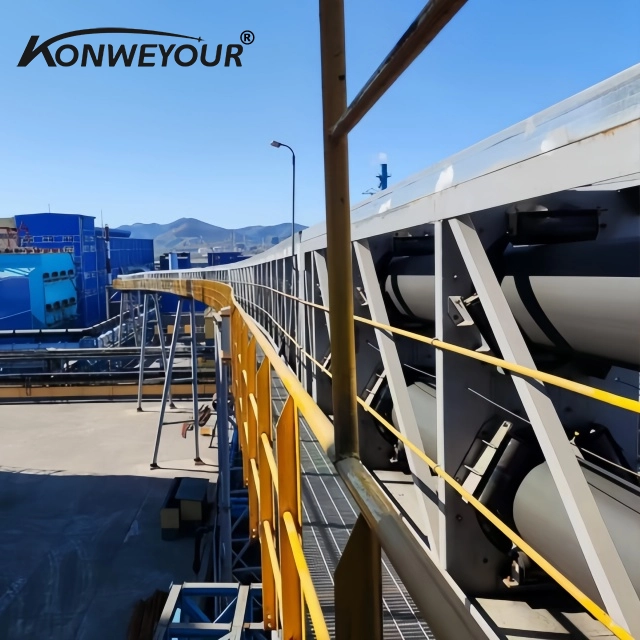

Maintaining precise belt alignment is a persistent challenge in bulk material handling, where slight deviations can lead to significant material spillage and premature belt wear. The Forward Inclination Offset Carrying Roller addresses these operational risks by integrating a specialized geometric design that actively guides the conveyor belt back toward its center. By combining a forward-inclined angle with an offset support structure, this component transforms a passive support roller into an active tracking tool, ensuring that high-speed and heavy-duty systems maintain stability even under uneven load distributions.
For operators in mining, cement, and port logistics, reducing downtime caused by off-tracking is critical for maintaining throughput. This specific roller configuration is engineered to minimize frictional resistance while maximizing structural rigidity, making it an essential upgrade for any industrial conveying system where reliability and long-term operational efficiency are prioritized over standard generic components.

The technical effectiveness of the Forward Inclination Offset Carrying Roller lies in its ability to create a corrective force on the conveyor belt. Unlike standard rollers that provide perpendicular support, the forward-inclined design introduces a subtle angle that encourages the belt to shift toward the center of the trough. This passive self-centering mechanism is vital for preventing the belt from drifting toward the structure, which typically results in edge fraying and hazardous material accumulation.
Complementing the inclination is the offset structure, which optimizes how the load is distributed across the roller surface. By shifting the center of support, the roller can better manage the lateral forces exerted by heavy bulk materials. This synergy reduces the risk of belt edge damage and ensures that the carrying surface remains stable during high-speed transportation. The result is a significant reduction in manual adjustments and a decrease in the frequency of belt replacements.

Industrial environments—particularly in mining and quarrying—are characterized by abrasive dust and corrosive moisture. To withstand these conditions, the Forward Inclination Offset Carrying Roller is constructed from high-strength steel, treated with advanced anti-corrosion coatings. This ensures that the structural integrity of the roller shell remains intact even when exposed to harsh chemical agents or extreme weather conditions, effectively extending the service life of the entire conveying line.
Beyond the shell, the internal mechanism utilizes high-precision bearings designed for low friction and high load capacity. By minimizing the rotational resistance, these bearings reduce the overall energy consumption of the conveyor motor and lower the heat generated during continuous operation. This focus on precision engineering ensures that the roller operates smoothly, reducing vibration and noise levels while preventing premature bearing failure under heavy-duty cycles.
The integration of these premium materials allows the roller to maintain its alignment properties over thousands of hours of operation. When integrated into a broader conveyor production strategy, such high-specification components reduce the total cost of ownership by lowering the frequency of maintenance interventions and spare part procurement.
The utility of offset carrying rollers is most evident in sectors where bulk material consistency varies. In cement plants and steel mills, the movement of heavy, abrasive aggregates can easily push a belt out of alignment. By installing forward inclination rollers at strategic intervals, engineers can create "correction zones" that automatically stabilize the belt, ensuring that the material remains centered and the conveying process remains uninterrupted.
In port logistics and mining, where conveyors often span several kilometers, a single instance of belt deviation can lead to massive material spillage and safety hazards. The offset structure provides the necessary stability for these long-haul systems, supporting the belt's edges more effectively than standard rollers. This is particularly important in high-speed applications where the momentum of the material increases the likelihood of lateral shifting.
Typical use cases include:
| Evaluation Factor | Standard Roller | Offset Carrying Roller | Operational Impact |
|---|---|---|---|
| Belt Tracking | Passive Support | Active Corrective | Reduced Off-Tracking |
| Edge Protection | Standard | Enhanced Support | Lower Belt Wear |
| Material Spillage | Moderate Risk | Low Risk | Improved Site Cleanliness |
| Friction Levels | Variable | Low (Precision Bearings) | Lower Energy Consumption |
| Service Life | Standard | Extended (Anti-Corrosive) | Fewer Replacements |
Selecting a roller is not merely about choosing a part number, but about matching the component to the specific technical demands of the site. A capable provider must be able to customize rollers to meet various international standards, such as CEMA, DIN, JIS, or GB. This ensures that the components are fully compatible with existing frames and belt widths, preventing installation delays and ensuring mechanical harmony within the system.
Quality assurance is the second pillar of supplier evaluation. Authoritative certifications like ISO9001, CE, and SGS indicate that the manufacturer maintains strict process control, from the raw steel sourcing to the final precision bearing fitment. For global operations, the ability to provide products that comply with multiple national standards allows for a streamlined supply chain across different geographic regions.
Furthermore, the integration of R&D capabilities allows a supplier to offer energy-efficient solutions. By collaborating with research institutes to develop intelligent conveyor systems, manufacturers can provide rollers that not only support the belt but contribute to a lower carbon footprint through reduced rolling resistance and optimized material flow.
From a procurement perspective, the shift toward high-performance offset rollers represents a move from reactive maintenance to proactive optimization. While the initial investment in precision-engineered rollers may be higher than in generic alternatives, the return on investment is realized through the drastic reduction in unplanned downtime and the extension of the belt's operational life.
Future trends in material handling point toward "smart" conveying ecosystems where components are designed for maximum longevity and minimum energy loss. Implementing forward inclination technology is a primary step in this direction, as it addresses the root cause of many system failures—misalignment. Procurement managers should prioritize suppliers who offer a full range of compatible spare parts, including idlers, pulleys, and cleaners, to ensure system-wide consistency.
To maximize the benefit of these rollers, it is recommended to conduct a full system audit to identify high-deviation zones. By strategically placing offset carrying rollers in these critical areas, operators can achieve a balanced system that requires less manual intervention and provides a more stable foundation for bulk transportation.
The forward-inclined angle creates a subtle lateral force on the belt as it passes over the roller. This force naturally pushes the belt back toward the center of the conveyor frame, acting as a passive steering mechanism that corrects small deviations before they become significant off-tracking issues.
The offset structure is most beneficial in heavy-duty systems transporting bulk materials that are prone to shifting, such as iron ore or crushed stone. It provides superior support for the belt edges, preventing the belt from sagging or shifting under asymmetric loads.
Yes, these rollers can be customized to comply with CEMA, DIN, JIS, and GB standards. This ensures they are fully compatible with a wide range of international conveyor frames and belt widths.
The rollers are manufactured from high-strength steel and treated with specialized anti-corrosion coatings. This protects the shell from rust and chemical degradation, which is essential for operations in ports, cement plants, and mines.
Yes, by utilizing high-precision bearings with low frictional resistance, the amount of torque required to rotate the rollers is reduced. Over a long conveyor system, this leads to lower energy consumption for the drive motors.
The main risk is increased belt deviation, which leads to material spillage, edge wear, and more frequent downtime for manual realignment, ultimately increasing the total cost of operation.
For facilities looking to optimize their bulk material transportation, investing in precision-engineered offset carrying rollers is a strategic move toward higher reliability and lower operational costs. Ensure your system is supported by components that meet international technical specifications for maximum longevity.

SUBSCRIBE NEWSLETTER