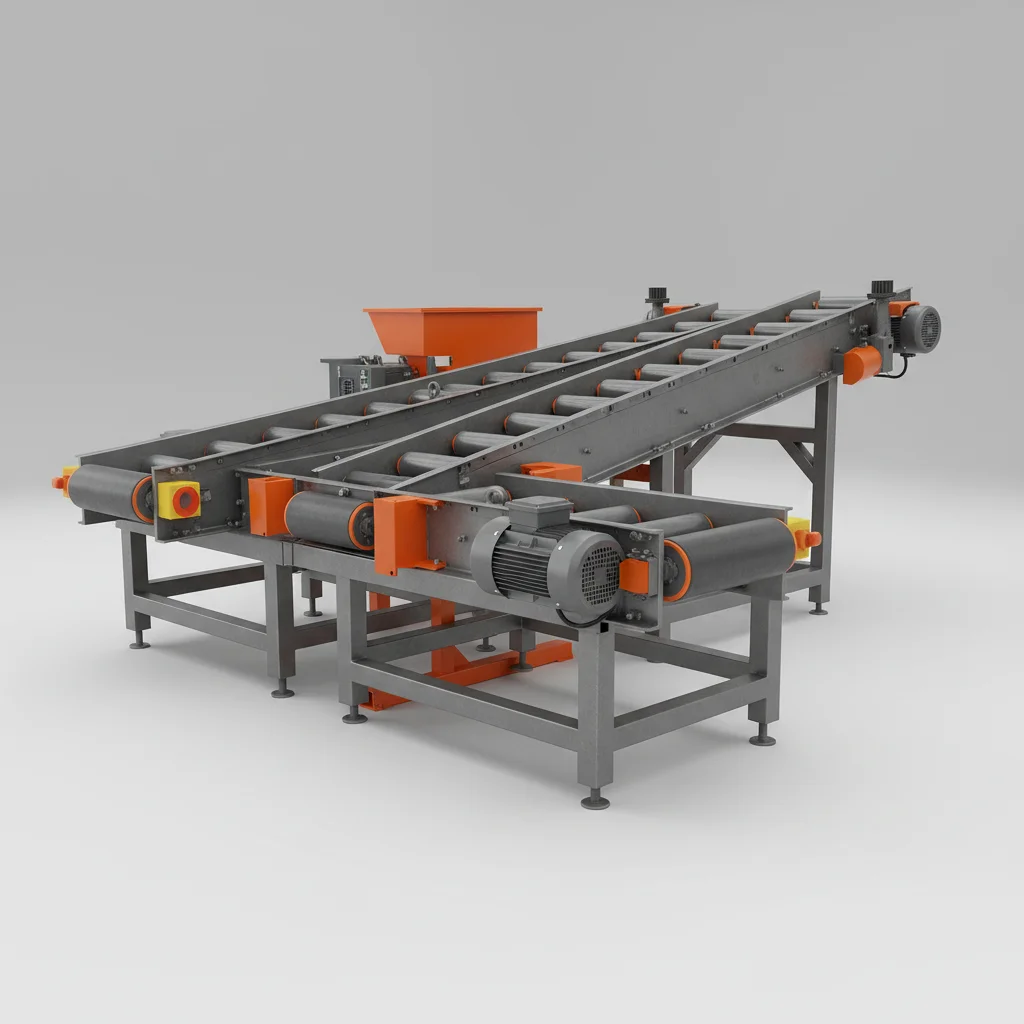
The global industrial landscape relies heavily on the seamless movement of materials, where the role of a professional conveying equipment manufacturer becomes pivotal in maintaining operational continuity. From mining excavations to automated logistics hubs, the efficiency of a conveyor system is often determined by the quality of its smallest components, ensuring that heavy loads are transported without slippage or excessive wear.
In heavy-duty industrial environments, the challenge of belt slippage and vibration can lead to costly downtime and premature equipment failure. To combat these issues, advanced engineering solutions like the Rubber & Steel Spiral Roller have been developed, combining structural rigidity with high-friction surfaces to stabilize the transport process and protect the integrity of the conveyor belt.
Selecting a reliable conveying equipment manufacturer ensures that every component—from the steel core to the precision bearings—is optimized for the specific demands of the application, ultimately reducing the total cost of ownership through enhanced durability and lower maintenance requirements.

The Engineering Logic of Rubber & Steel Spiral Rollers
The Rubber & Steel Spiral Roller is meticulously engineered to provide exceptional support for conveyor belts operating under extreme stress. By utilizing a strong steel core wrapped in a spiral rubber covering, this component leverages the compressive strength of steel and the adaptive grip of rubber to create a balanced interface between the drive system and the belt.
This hybrid design is a hallmark of a quality conveying equipment manufacturer, as it specifically targets the physics of friction. The spiral geometry doesn't just provide a surface; it creates a mechanical interlock with the belt, ensuring that power is transferred efficiently and that the belt remains centered and stable during continuous operation.
Core Components for Industrial Durability
At the heart of the spiral roller is a high-grade steel core, which serves as the primary load-bearing element. This core ensures that the roller does not deform under the weight of bulk materials, maintaining a perfect cylindrical shape that is essential for smooth rotation and preventing uneven wear on the conveyor belt.
Complementing the core is the rubber helix, a specialized layer that wraps around the steel. This rubber is formulated for high wear resistance and corrosion protection, allowing the roller to withstand harsh chemical exposures or abrasive particles common in mining and manufacturing environments.
To ensure longevity, precision bearings are integrated into the assembly. These bearings reduce internal friction and heat buildup, allowing the roller to operate quietly and efficiently even under continuous heavy loads, which is a critical requirement for any top-tier conveying equipment manufacturer.
Enhancing Friction and Reducing Belt Slippage
Belt slippage is one of the most persistent challenges in material handling, often leading to energy loss and accelerated belt degradation. A professional conveying equipment manufacturer addresses this by implementing the spiral rubber design, which significantly increases the coefficient of friction between the roller and the belt.
The rubber helix acts as a series of micro-grips that prevent the belt from sliding backward or shifting laterally. This ensures a stable and smooth conveyor operation, which is essential for transporting heavy bulk materials where any sudden slip could cause a system jam or a safety hazard.
By optimizing the pitch and hardness of the spiral rubber, a conveying equipment manufacturer can tailor the roller to specific belt materials, ensuring that the grip is firm enough to prevent slippage but smooth enough to avoid tearing the belt surface over time.
Performance Metrics in Heavy-Duty Environments
Evaluating the effectiveness of a roller involves analyzing its ability to absorb shock and maintain low friction. In heavy-duty environments, the rubber layer serves as a buffer, absorbing vibrations that would otherwise be transmitted directly to the steel structure of the conveyor, thereby extending the service life of the entire system.
When comparing different design approaches from a conveying equipment manufacturer, the spiral rubber configuration consistently outperforms smooth steel rollers in terms of grip and vibration dampening, as shown in the performance analysis below.
Performance Comparison of Roller Designs by conveying equipment manufacturer
Global Applications in Mining and Logistics
The versatility of the Rubber & Steel Spiral Roller makes it an essential component for a conveying equipment manufacturer serving the global mining sector. In deep-pit mining and bulk material handling, where ore and aggregates are moved in massive volumes, the shock absorption and grip of these rollers prevent belt misalignment and reduce wear.
Beyond mining, these rollers are widely utilized in large-scale logistics centers and manufacturing plants. In these settings, the focus shifts toward low-noise operation and high efficiency, where the precision bearings and rubber dampening ensure a quiet work environment without sacrificing the capacity to handle heavy industrial loads.
Long-term Value of Shock Absorption Technology
The long-term value of investing in high-quality rollers from a reputable conveying equipment manufacturer lies in the reduction of "hidden costs." Every vibration absorbed by the rubber screw design is a vibration that does not stress the conveyor's frame, motor, or belt joints, effectively extending the mean time between failures (MTBF).
Furthermore, the wear-resistant nature of the high-quality rubber and steel combination ensures that the rollers do not need frequent replacement. This reliability is crucial for operations in remote industrial zones or underground mines where replacing a single roller can require hours of labor and system shutdown.
Ultimately, the marriage of steel's strength and rubber's resilience creates a synergy that promotes system stability. This results in a more predictable maintenance schedule and a higher overall equipment effectiveness (OEE) for the end-user.
Future Innovations in Conveying Component Design
As the industry moves toward smarter and greener operations, the role of a conveying equipment manufacturer is evolving. Future iterations of the spiral roller may include integrated sensors to monitor bearing temperature and wear in real-time, enabling predictive maintenance rather than reactive repairs.
Sustainability is also driving the development of new rubber compounds. We are seeing a shift toward eco-friendly, biodegradable, or recycled elastomers that maintain the same friction and durability standards while reducing the environmental footprint of the manufacturing process.
Digital transformation is further enhancing the precision of these components. With the help of advanced simulation software, engineers can now optimize the spiral geometry for specific material densities, ensuring that each roller is perfectly tuned to the exact load and speed of the conveyor system.
Comparative Analysis of Spiral Roller Performance across Industrial Sectors
| Industry Sector | Primary Load Type | Key Benefit | Durability Score (1-10) |
|---|
| Mining | Abrasive Ore/Coal | Wear Resistance | 9 |
| Logistics | Packaged Goods | Noise Reduction | 8 |
| Manufacturing | Metal Parts | Stability/Alignment | 8 |
| Bulk Handling | Grains/Cement | Slippage Prevention | 9 |
| Chemical Plants | Corrosive Material | Corrosion Protection | 7 |
| Construction | Sand/Gravel | Shock Absorption | 9 |
FAQS
The primary advantage lies in the hybrid construction. While steel rollers provide strength, they often suffer from low friction, leading to belt slippage. The spiral rubber covering increases grip significantly and provides essential shock absorption, which protects both the belt and the roller from premature wear and vibration damage.
The spiral or helical rubber design creates a mechanical interface with the conveyor belt. Unlike a smooth surface, the helix provides continuous contact points that "grip" the belt fabric, ensuring that the drive force is transmitted efficiently without the belt sliding backward or shifting off-center.
Yes, they are specifically designed for such conditions. By using high-quality, corrosion-resistant rubber to wrap the steel core, the roller is shielded from moisture and chemicals. A professional conveying equipment manufacturer can also customize the rubber compound to resist specific chemical agents found in your facility.
Due to the use of precision bearings and durable materials, maintenance is minimal. Regular inspections should focus on ensuring that the rubber helix remains intact and that there is no excessive buildup of debris around the bearings. Proper lubrication of the bearings (if applicable) ensures a long service life.
Absolutely. The combination of a balanced steel core and precision bearings allows for smooth, low-friction rotation even at higher speeds. The rubber dampening also helps mitigate the noise and vibration that typically increase as conveyor speed rises, maintaining system stability.
You should consider the load weight, the abrasiveness of the material, and the environmental conditions. Consulting with a specialized conveying equipment manufacturer will allow you to determine the optimal rubber hardness and steel core thickness needed to ensure maximum durability for your specific use case.
Conclusion
In summary, the Rubber & Steel Spiral Roller represents a critical advancement in conveyor technology, solving the dual problems of belt slippage and mechanical vibration. By integrating the structural rigidity of steel with the high-friction and cushioning properties of a rubber helix, this component ensures that heavy-duty industrial systems operate with maximum stability and minimal wear. For any operation relying on the continuous movement of bulk materials, prioritizing these engineered components is a strategic move toward operational efficiency.
Looking forward, the integration of smarter materials and predictive monitoring will further elevate the standards of material handling. Businesses that partner with a forward-thinking conveying equipment manufacturer can secure a competitive edge by reducing downtime and extending the lifespan of their infrastructure. We invite you to explore our full range of durable conveyor components to optimize your system's performance. Visit our website: www.jtconveyor.com