Jun. 11, 2026
In the demanding world of mining and aggregate processing, the efficiency of your material handling system depends heavily on the quality of its components. High-performance crusher conveyor rollers serve as the backbone of the transport process, ensuring that heavy loads move smoothly from the crusher to the stockpile. When rollers fail or wear prematurely, it leads to costly downtime and reduced throughput. This guide explores how selecting the right rollers can minimize friction, extend belt life, and maximize the overall productivity of your crushing plant.

Crushers produce some of the most abrasive materials in the industrial world. From jagged granite to dense iron ore, the impact and friction placed on crusher conveyor rollers are immense. These rollers are not merely supports; they are engineered to distribute the weight of the belt and its load evenly, preventing belt sag and reducing the energy required for the motor to drive the system. Using low-quality rollers often results in "flat spots" or bearing failure, which can cause the belt to mistrack or even tear, resulting in catastrophic operational halts.
Industry Insight: Premium rollers featuring precision-engineered bearings and reinforced shells can reduce operational energy costs by up to 15% by significantly lowering rolling resistance.
Not all rollers are created equal. Depending on the environment—whether it's a wet quarry or a dusty desert mine—the material of the crusher conveyor rollers must be carefully chosen. Steel rollers are the gold standard for high-impact zones, providing unmatched structural integrity. However, HDPE (High-Density Polyethylene) or rubber-lagged rollers are often used to reduce noise and provide better grip. The internal bearing housing is equally critical, often requiring labyrinth seals to keep out the fine dust particles generated by the crushing process.
Common Material Advantages:
• Steel: Maximum load capacity and impact resistance.
• Rubber Lagging: Increased friction and belt wear protection.
• HDPE: Corrosion resistance and lightweight handling.
• Ceramic Coating: Extreme abrasion resistance for the harshest ores.
When auditing your equipment, it is essential to distinguish between general-purpose rollers and those specifically designed for crusher applications. Standard rollers often fail under the sudden shock loads common at the crusher discharge point. Heavy-duty crusher conveyor rollers utilize thicker wall pipes and reinforced bearings to withstand these stresses. The following table highlights the stark differences in performance and lifespan.
Even the highest quality crusher conveyor rollers can fail if improperly installed. Ensuring that rollers are perfectly square to the conveyor frame is vital to prevent belt drift. Maintenance teams should implement a scheduled inspection routine, checking for abnormal noise or heat signatures using infrared thermography, which can signal a failing bearing before it seizes. Regular cleaning of the roller surfaces prevents material build-up, which can cause the belt to slide and increase wear on both the belt and the roller shell.

Precision is everything when ordering replacement crusher conveyor rollers. Specification mismatches can lead to instability and increased vibration. Most heavy-duty rollers are designed to meet international standards (CEMA or DIN), ensuring compatibility across different conveyor brands. Below are the typical technical specifications for a high-capacity industrial crusher roller.
External conditions play a massive role in the degradation of crusher conveyor rollers. In high-humidity environments, oxidation can compromise the shell's integrity, making galvanized or coated rollers a necessity. In extremely cold climates, the lubrication within the bearings can thicken, increasing torque and risk of seizure. By analyzing the site-specific environment, plant managers can choose rollers with specific grease grades and protective coatings to ensure the system remains operational regardless of the weather.
Investing in high-quality crusher conveyor rollers is not an expense, but a strategic move to lower the total cost of ownership. By reducing friction, preventing belt damage, and extending the intervals between maintenance cycles, these components directly impact the profitability of your mining or quarry operation. For those seeking reliability in the most brutal conditions, choosing engineered, heavy-duty rollers is the only way to guarantee consistent uptime and operational safety.
For high-impact zones, a weekly visual inspection is recommended. Maintenance teams should look for signs of "flat spotting," unusual vibration, or audible grinding sounds coming from the bearings. In extremely abrasive environments, monthly detailed audits using thermal imaging can help identify bearings that are overheating due to contamination or lubrication failure, allowing for replacement before a full system breakdown occurs.
The primary cause of failure is contamination. Fine dust and grit from the crushing process penetrate the bearing seals, acting as an abrasive that wears down the internal races. Secondly, impact damage—where large chunks of ore hit the roller directly—can bend the shaft or dent the shell. This is why utilizing labyrinth seals and reinforced shells is critical for crusher conveyor rollers in heavy-duty applications.
While HDPE rollers offer excellent corrosion resistance and lower noise, they are generally not recommended for the primary impact zone directly under a crusher discharge. The sheer force of falling heavy ore can crack or deform plastic shells. It is best to use reinforced steel rollers in the impact zone and transition to HDPE or rubber-lagged rollers in the return or carry sections where the load is more stable and corrosion is a bigger concern than impact.
The diameter is typically determined by the belt width and the total load per meter. Larger diameters (such as Ø178mm) provide better support for heavier loads and reduce the "sag" between rollers, which lowers the energy required to move the belt. However, larger rollers are heavier and may require different frame specifications. We recommend consulting the technical load charts on the JT Conveyor website to match the roller size with your specific tonnage requirements.
Mar 11,26
Optimizing Manufacturing Processes with Advanced Factory Conveyor Systems
Mar 14,26
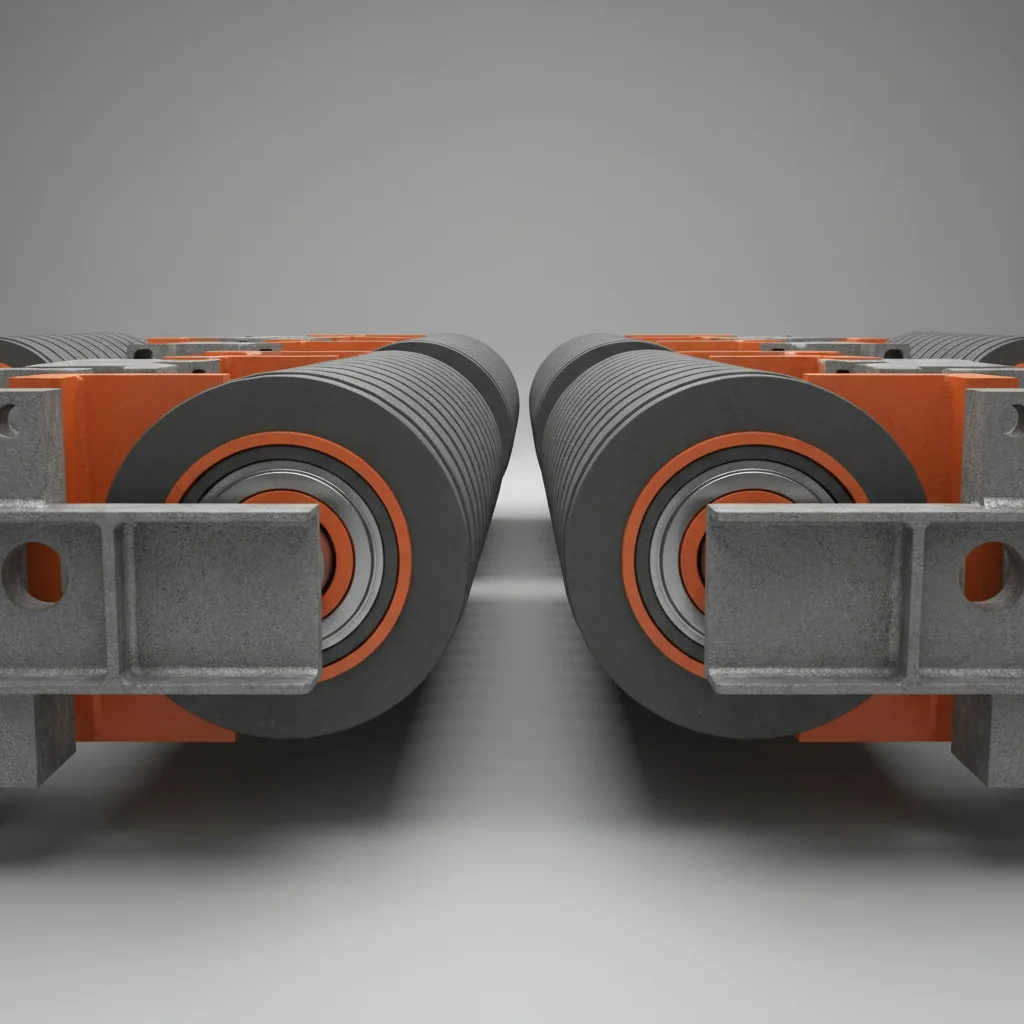
Comprehensive Guide to Aggregate Conveyor Rollers for Efficient Material Handling

Oct 14,26
Top Industrial Conveyor Manufacturers for Underground Systems

Oct 29,26
Top Quality Magnetic Belt Conveyor Manufacturers Solutions
Feb 27,26
Understanding Large Conveyor Rollers for Efficient Material Handling Systems

Jul 17,26
Top Conveyor Belt Manufacturers for Hot Vulcanized Pulleys
SUBSCRIBE NEWSLETTER